Latest Posts
- »
The AI-Native Enterprise: When Organizations Become SoftwareAI agents may transform organizational architecture, the economics of scale, and the future of human leadership.
The enterprise is becoming an intelligent, programmable, and self-improving system.
Traditional companies are designed around the capabilities and limitations of human workers. AI-native enterprises will increasingly be designed around the capabilities of intelligent agents.
In this new paradigm, organizational architecture becomes a software engineering discipline. Human leadership shifts from managing people and supervising execution toward defining purpose, establishing constraints, allocating resources, and stewarding an increasingly autonomous organization.
The competitive advantage may no longer come primarily from having the most talented workforce, but from designing the most capable organizational system.
(more...)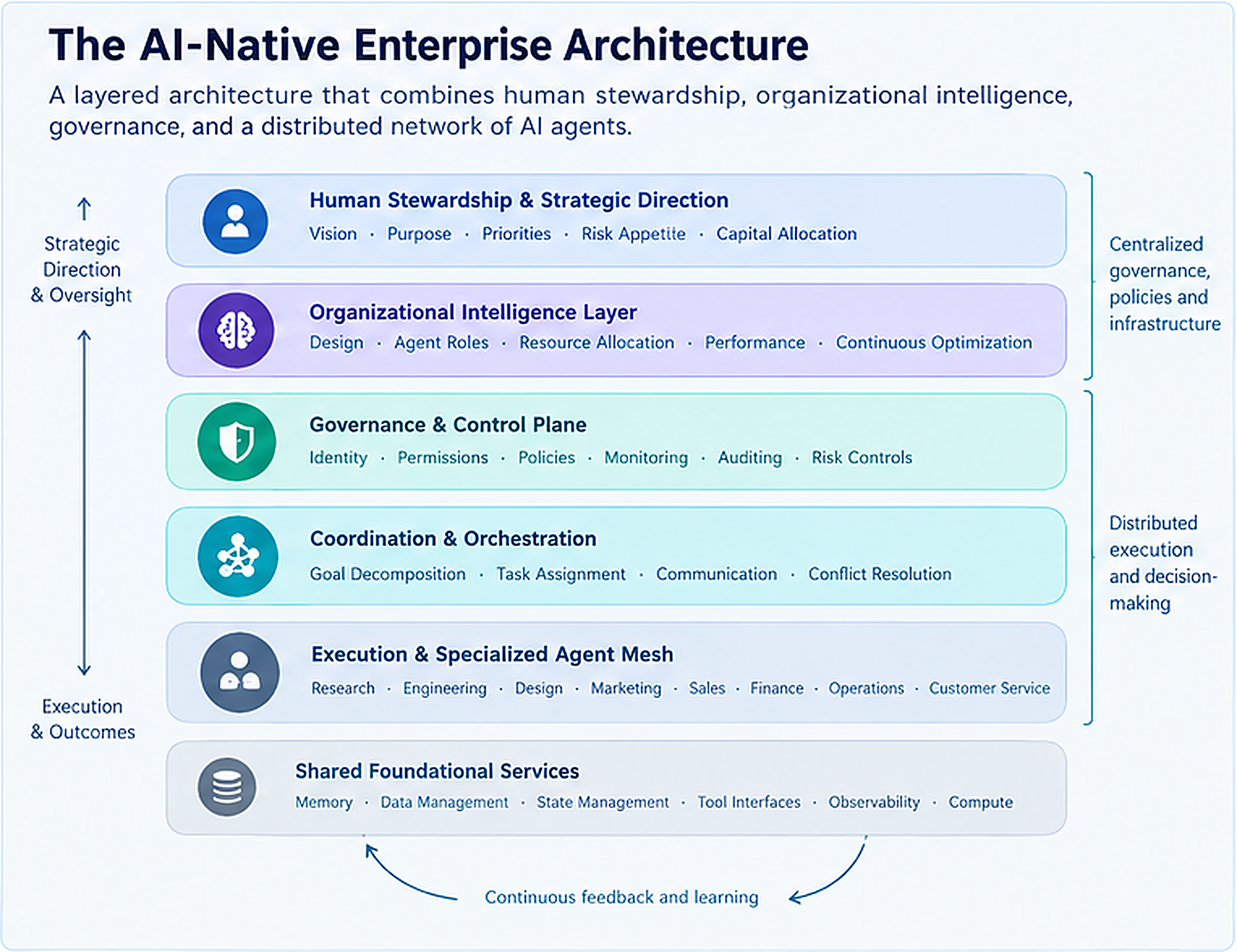
- »
Implementing a Serverless ArchitectureEvent-driven serverless architectures promise improved resiliency and scalability, as serverless platforms consist of managed services that abstract away the infrastructure used to operate them. Serverless also promises increased agility because we can focus on building and delivering new capabilities quickly, without needing to work with the infrastructure.
In the previous article we discussed how to design an application architecture to effectively leverage serverless, and showed a simple example (based on the “Build a serverless web app in Azure” tutorial). In this article we discuss how that architecture can be made highly available and fault-tolerant across multiple data center regions in Azure, as well as enabling continuous deployment, operations automation, and monitoring, etc.; just as real applications do.
(more...)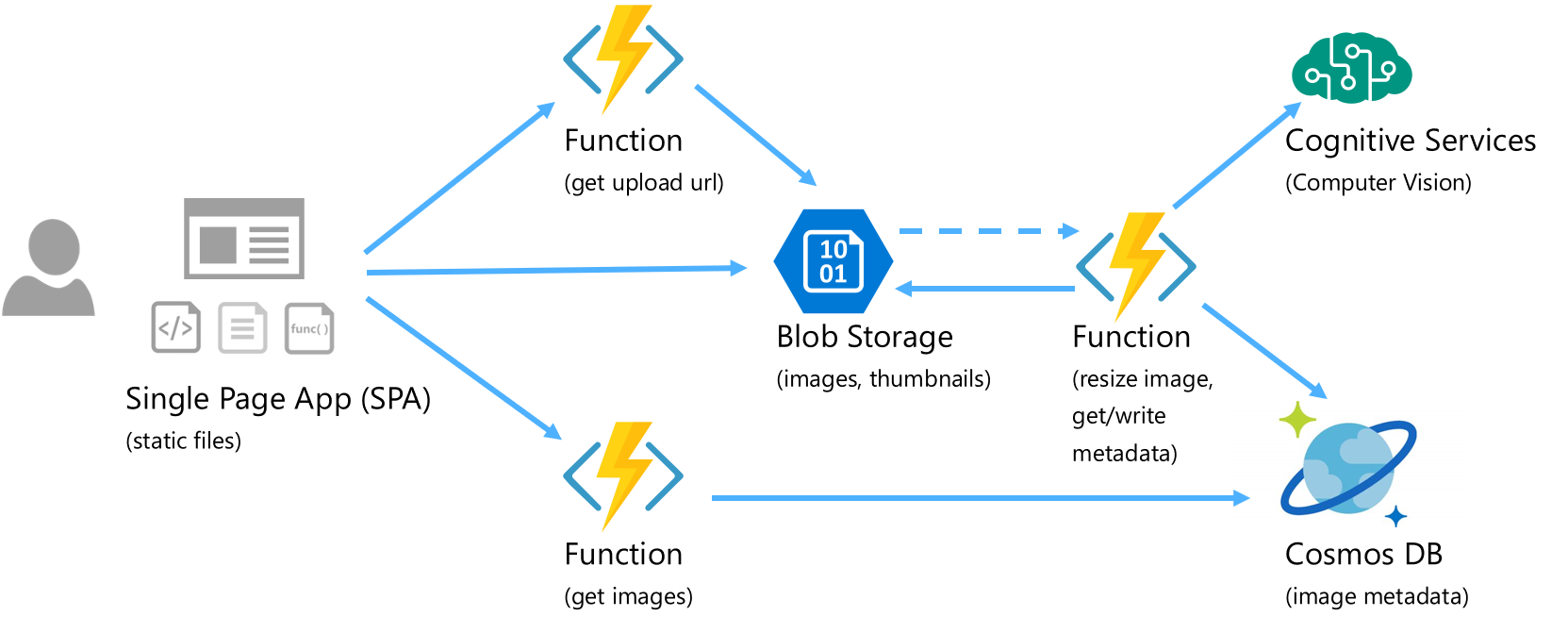
- »
Event-Driven Serverless ArchitecturesServerless - the latest and most ‘cloud-native’ approach to developing applications, offers increased agility, improved resilience and scalability, and a pure on-demand consumption-based cost model. However, to truly realize those benefits and deliver more advanced outcomes, we should look beyond the relatively narrow focus on Functions-as-a-Service (FaaS; or related variants such as BaaS (Backend), fPaaS (Function Platform), serverless PaaS, etc.). Basically, it is worthwhile to approach serverless from an architectural perspective; and more specifically, with event-driven serverless architectures.
(more...)
- »
Cloud Service Models (IaaS, PaaS, SaaS) DiagramGuessing most of us have seen a version of the diagram that compares the cloud computing service models (IaaS, PaaS, SaaS) and on-premises environments, sometime within the past few years? You know, the one that uses a visualization of four software (layer cake) stacks to describe the differences between infrastructure, platform, and software “-as-a-service” models as described in The NIST Definition of Cloud Computing?
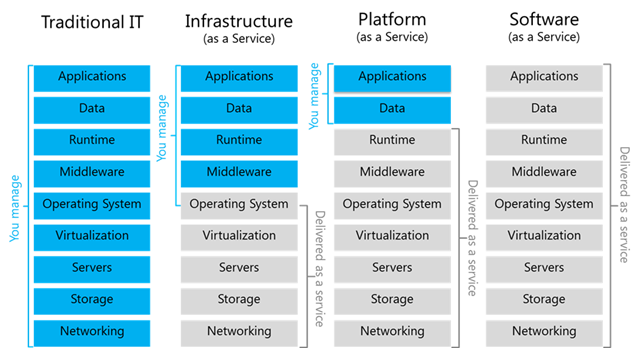
This is the (boring) story/recap of how this diagram came to be. 😉
(more...) - »
Multiple InheritanceIt was back in 2008 when I first wrote about .NET and Multiple Inheritance. Since then I have received many feedback (some were particularly pointed), though kind of amazed that this is still a subject of debate even today.
(more...)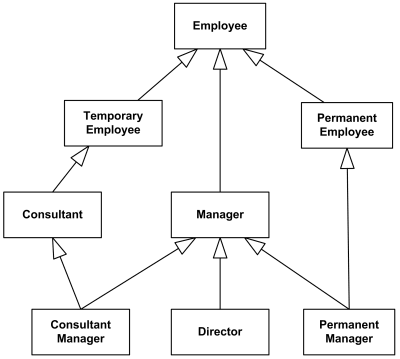
Most Viewed Posts
- » Cloud Service Models (IaaS, PaaS, SaaS) Diagram
- » Event-Driven Serverless Architectures
- » Implementing a Serverless Architecture
- » Using Events in Highly Distributed Architectures
- » .NET and Multiple Inheritance
- » Rise of the Cloud Ecosystems
- » Cloud Computing and the Microsoft Platform
- » Describing Web Platform Stack
- » Designing for Cloud-Optimized Architecture
- » Strong User Authentication on the Web
Most Viewed / Latest Presentations
- » Cloud Native Applications
- » Designing Artificial Intelligence
- » Microsoft AI Platform Overview
- » Designing Microservices
- » Designing Artificial Intelligence (webcast)
- » Designing Artificial Intelligence (webcast)
- » Building Highly Scalable Java Applications on Windows Azure
- » Microsoft Cloud Computing - Windows Azure Platform
- » Patterns for Parallel Computing
- » Microsoft Cloud Services Architecture